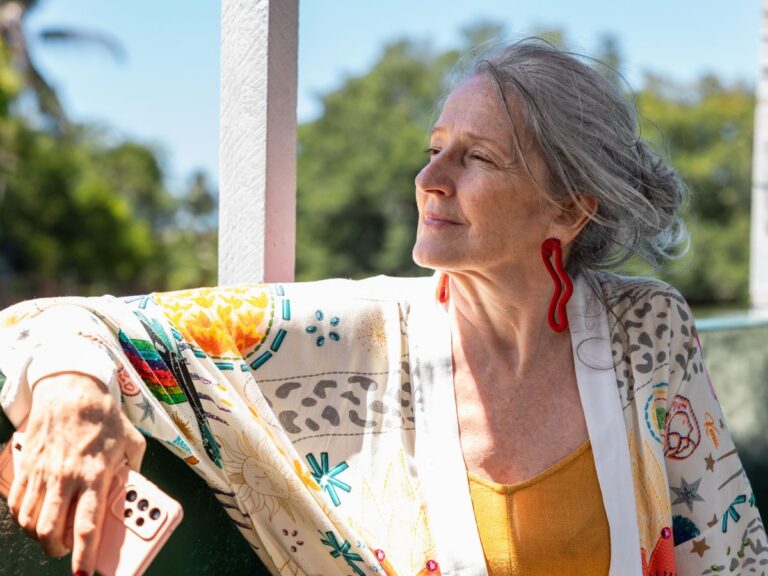
Women Over 50 Travel: 17 Lessons That Make Every Trip Better
If you’re a woman over 50 who loves to travel, here’s what I want you to know: your best trips are not behind you, they’re ahead of you. Women over 50 travel differently than they did at 30, and in my experience, they travel better.
I’m Krissy, a travel planner in my 50s and a passionate believer that travel gets better with age. I specialize in helping women in their 50s, 60s, and 70s travel meaningfully, confidently, and with ease.
I’ve put together 17 practical travel tips for women over 50 that I promise will make your next trip easier and a whole lot more enjoyable.

Why Travel Changes After 50
One of the biggest mistakes I see women in midlife and beyond make is trying to travel the same way they did in their 20s and 30s.
The reality is that most of us don’t want the same things anymore.
We have more freedom, more confidence, and a much clearer idea of what makes a trip enjoyable.
Travel in your 50s looks different from your 60s, and your 60s look different from your 70s. And if you’re as active as my in-laws, your 80s too.
Travel after 50 isn’t about doing less. It’s about doing what matters most and letting go of the rest.

1. Buy the Best Seat You Can Afford
If you’re anything like me, long-haul flights are harder on your body than they used to be.
Less sleep. Stiff joints. Swollen ankles. You arrive feeling exhausted before the trip has even started.
My personal rule at 52 is simple: if the flight is seven hours or less, I’ll usually book economy. I’d rather spend the money on experiences once I arrive.
For anything longer, I seriously consider Premium Economy or Business Class.
Starting a trip feeling rested is worth a lot.
And while I’m not suggesting everyone should fly business class, I completely understand why many of my clients over 50 decide it’s money well spent.
But if you are flying economy, choose your seat carefully.
My favorites are:
- Exit row seats for extra legroom
- Bulkhead seats for additional space
- Aisle seats if you like to stretch and move around
I’d avoid middle seats whenever possible and be cautious of seats near toilets and seats directly in front of an exit row.
Before booking, I always check SEATMAPS to see exactly what I’m getting. A few minutes of research can save you from an uncomfortable flight.

2. Always Try to Fly Direct
This one is simple: skip the layover wherever you can.
Connections add stress, eat into your energy, and introduce a whole extra layer of things that can go wrong.
Spend the extra money for a direct flight. Your body will thank you.
If a layover is unavoidable, build in a minimum of two hours on the ground, three if you’re connecting through a busy international hub.

3. Pre-Book Your Airport Transfer Before You Travel
After a long-haul flight, the last thing you need is to figure out public transport in an unfamiliar city.
That’s why I nearly always recommend pre-booking an airport transfer.
At 25, dragging a suitcase onto a crowded train felt like part of the adventure.
At 52, I’d much rather have someone waiting for me at arrivals.
A private transfer means no taxi queues, no confusing train stations, and no standing on a street corner trying to work out where your ride is.
You simply collect your luggage, meet your driver, and head straight to your hotel.
I often recommend WELCOME PICKUPS to clients because they’re reliable, easy to book, and available in many destinations around the world.
One client recently told me that after using a private transfer for the first time, she’d never travel without one again.
Once you’ve experienced it, you’ll understand why.

4. Book the Hotel for the Night Before an Early Arrival
If you only take one tip from this article, make it this one.
If your flight lands early in the morning, book your hotel for the night before.
As a travel advisor, I can tell you that early check-in is never guaranteed, no matter how many times you request it.
If you’re working with a travel advisor who has a relationship with the hotel, they can often improve your chances. But it’s always subject to availability.
After a long-haul flight, the last thing you want is to arrive at 7am and discover your room won’t be ready until mid-afternoon.
I recently arranged an extra night for a client flying from the US East Coast to Lisbon.
Her flight landed at 6am. We booked the night before. She walked straight into her room.
Later she messaged me and said it was the best travel decision she’d ever made.
I’ve never once had a client regret booking the extra hotel night.

5. Hotel vs Airbnb for Women Over 50
One of the most common questions I get is whether to book a hotel or an Airbnb or another vacation rental.
My advice is usually straightforward: for most people over 50, a hotel is the better choice.
In my experience, what matters most at this stage of travel is reliability, comfort, and support.
With a hotel, you don’t have to worry about entry codes, unclear check-in instructions, or turning up late at night hoping everything matches the listing photos.
And let’s be honest, after a long journey, the last thing most of us want is to figure out how to work a lockbox or what to cook for dinner.
Hotels also give you something people often overlook – a concierge.
In my opinion, this is one of the most underused travel resources.
A good concierge can recommend restaurants you’d never find online, secure last-minute reservations, and help you navigate a city with ease.
I always recommend choosing a hotel in a central location wherever possible. Being close to the sights saves time, energy, and unnecessary travel stress.
That said, there are exceptions. Some travelers prefer apartments for longer stays or traveling with family, and that can absolutely work well if you know what you’re getting. This is where a travel advisor can help.
👉 Work with me
6. Why Work With a Travel Advisor as a Woman Over 50
Once you’ve worked with an experienced travel advisor, you rarely go back to planning everything yourself.
For many women over 50, travel becomes less about figuring everything out and more about enjoying the experience itself.
A good travel advisor doesn’t just book flights and hotels. They design trips around how you actually like to travel – your pace, your comfort level, and your interests.
They also handle the details you don’t want to think about, so the whole trip feels easier and more intentional.
I always take time to understand how someone travels before I start planning anything. That includes energy levels, mobility, preferences, and even how much structure they want in their days.
Holly & Heather’s Travel Story
I recently designed a fully customized 7-day itinerary to Scotland for my client Heather and her sister-in-law, Holly.
Holly had recently lost her husband and she asked Heather to plan a girls’ trip so she could get away from it all. It was her first time traveling without her partner.
This was a big deal. And I treated it that way.
The trip wasn’t about squeezing in as much as possible. It was about ease, low pressure and gentleness. Giving her the space to experience travel again, without having to worry about a single logistical detail.
I did all the heavy lifting so she didn’t have to.
This is what thoughtful travel planning looks like.
7. Stay Longer, See Less: A Better Way to Travel After 50
One of the best travel tips I can give women over 50 is simple: stop trying to see everything.
In my experience, the trips people enjoy most are not the ones packed with activities. They’re the ones with space built in.
If you can, choose fewer destinations and stay longer in each place.
Plan one main activity a day, and leave room for nothing at all. Some of the best travel moments happen in those quiet gaps – sitting at a café, watching the world go by, or wandering without a plan.
Travel slows down naturally as we get older, and honestly, that’s not a bad thing. It’s often where the real enjoyment begins.
Mae’s travel story is a perfect example of this.
Mae’s Travel Story
Mae recently turned 79 while solo traveling in Amsterdam.
For years, group tours were her go-to. But over time the pace felt too fast, the itinerary too fixed, and she found herself feeling obligated to spend time with fellow travelers she hadn’t chosen.
So together we planned a 10-day custom itinerary built entirely around her interests.
One activity per day. A deep dive into the Dutch Masters. A visit to Keukenhof Gardens, a private driver to take her to Delft and a visit to The Hague by train with an experienced local guide.
Mae is proof that travel over 70 doesn’t have to mean compromise. It just means planning it carefully.
8. Sort Your Travel Insurance Early
Travel insurance isn’t optional when you’re traveling in your 50s and beyond. It’s essential.
And I say that from experience, not theory.
One of the most common mistakes I see is people leaving insurance until the last minute or assuming they’re automatically covered for things like pre-existing medical conditions.
That assumption can become very expensive very quickly.
The most important thing is to check the coverage before you buy anything. Make sure your policy covers any existing health conditions you have.
This is particularly important when it comes to travel insurance for over 50s with pre-existing medical conditions. Coverage varies enormously between providers and the small print matters more than most people realize.
I also strongly recommend considering Cancel For Any Reason (CFAR) cover. Life changes, plans shift, and having flexibility can make a huge difference.
Just be aware that CFAR usually has a strict purchase window, often within 14 days of your first trip payment. Miss that window and you lose the option entirely.
I’ve seen travelers caught out by this more than once, simply because they left it too late.
It’s one of those unglamorous parts of travel planning, but getting it right means you can relax and enjoy the trip without worrying about what might go wrong.
For my own travel and for most of my clients, I recommend FAYE TRAVEL INSURANCE. It’s the insurance I use myself and one I trust enough to recommend to my clients.

9. Accessible Travel Tips for Women Over 50
One of the most important things I’ve learned working with women over 50 is this: small details make a big difference when you’re traveling.
And the earlier you share them, the better your experience will be.
If stairs are difficult, you need a walk-in shower, or you prefer shorter walking distances, don’t wait until you arrive to mention it. Tell your travel advisor, your hotel, or your tour provider when you book.
The more details they have, the more they can do to prepare properly for you.
I’ve seen trips completely transformed simply because someone shared this information early, and I’ve also seen unnecessary stress when it was left too late.
I recently had a client traveling with her cousin who has MS. She told me she could walk fine but didn’t like hills and needed frequent rest stops.
That detail was incredibly helpful, especially as they were visiting Athens, a city with a lot of steep streets and uneven walking routes.
It allowed me to plan sightseeing at a pace that worked for her, rather than against her.

10. Vet Your Travel Companions
The wrong travel companion can ruin a trip faster than a missed flight.
Incompatible travel styles cause more friction than most people realize.
Do you want slow mornings while they want to be out the door by 7am? Are you happy to spend on experiences while they are tracking every Euro? Do you like flexibility while they prefer a strict plan?
These differences matter more than most people realize until they’re already on the trip.
Before you commit to traveling with someone, have an honest conversation about budget, pace, and expectations. It doesn’t have to be awkward – it just needs to be clear.
And if your travel styles don’t align, that doesn’t mean you can’t travel. It just means you might travel differently.
For many women over 50, solo travel or small women’s travel groups can be a really positive alternative. You get connection when you want it, and independence when you don’t.
And the over 50s community of solo female travelers is bigger, more connected, and more welcoming than you might think.

11. How to Stay Healthy While Traveling After 50
Travel feels very different when you give yourself permission to feel well.
One of the simplest but most overlooked tips is to build in recovery time when you land. I never plan anything important on day one after a long-haul flight. Certainly no tours! Your body needs time to adjust, even if your mind is ready to go.
Get some daylight, move gently, and allow yourself a slower start before you begin exploring.
If you take regular medication, always pack more than you think you’ll need and keep it in your carry-on bag. I also recommend carrying a simple note from your doctor listing what you take, especially when traveling internationally.
I’ve seen too many situations where medication was packed in checked luggage or not easily accessible when needed. It’s one of those small things that makes a big difference if something goes wrong.
The goal isn’t to overthink travel. It’s simply to remove avoidable stress so you can enjoy the trip once you arrive.

12. Wear the Right Shoes
I would love to say I still prioritize style when I travel. But after one very painful lesson, comfort always wins.
About 10 years ago, I spent a day walking the hills of San Francisco in the wrong shoes. I ended up with plantar fasciitis that lasted two years and required steroid injections.
It was one of those travel mistakes you only make once.
Now, I never compromise on footwear. Comfortable, supportive shoes are non-negotiable for me, especially in destinations like Europe where cobblestones are beautiful but unforgiving.
Blisters and sore feet don’t just cause discomfort – they shorten your days and limit what you can actually see and enjoy.
I learned this the hard way, so you don’t have to.
I’m a big fan of Kuru shoes for travel. They helped me recover and they’re still my go-to for long days on my feet. For sandals, I also love Vionic (not a sponsored recommendation.)
For me, it’s simple now: comfort first, always.

13. Know Where the Toilets Are
This is one of those things you don’t think much about until you’re halfway through a day of sightseeing and suddenly need to.
For many women over 50, especially if you’re going through peri-menopause or menopause, knowing where the nearest toilet is becomes more important than it used to be. It’s just one of those practical travel realities.
And in some parts of Europe, they can be surprisingly difficult to find when you need them most.
That’s why I always recommend downloading the Flush App before you travel. It shows public toilets in cities around the world and can save you a lot of unnecessary stress during long days out.
It’s a small thing, but it makes a big difference to how relaxed you feel when you’re exploring.
14. Pre-Book Tours & Experiences
I’m not a fan of over-scheduling a trip.
In fact, I usually recommend the opposite – leave space to slow down and explore.
But there are a few things I always suggest booking in advance.
Anything that matters to you personally, or is likely to sell out, is worth securing before you travel. That might be museum entry, a special tour, or a restaurant you’ve been looking forward to.
It’s less about planning every moment and more about protecting the experiences you really don’t want to miss.
I’ve seen travelers waste entire mornings standing in queues they could have avoided, or miss out on places they were excited to see simply because they didn’t book ahead.
Popular cities like Paris, Rome, and Amsterdam are a good example. The difference between a smooth trip and a frustrating one often comes down to a few key reservations made in advance.
For everything else, I prefer to keep things more flexible.
Platforms like VIATOR are useful for booking skip-the-line tickets and tours.
For restaurants, your hotel concierge or travel advisor can often secure reservations that aren’t available online.

15. Embrace Technology On The Road
I know technology isn’t everyone’s favorite part of travel. But used well, it can make trips significantly easier.
For me, the goal isn’t to rely on apps for everything. It’s to remove friction from the parts of travel that tend to cause the most stress.
As a FORA TRAVEL advisor, I create itineraries for my clients using Fora’s Traveler App, which keeps all booking confirmations, trip details, and schedules in one place.
It means everything is organized in a single, easy-to-access itinerary without needing to search through emails or multiple apps while traveling.
Google Maps is another essential.
I always download maps offline before I travel so I can navigate without worrying about data or roaming charges.
An eSIM is one of the simplest upgrades you can make. It gives you instant mobile data when you arrive in a new country, without hunting for a local SIM card.
I also recommend Apple AirTags in checked luggage. If your bag goes missing, you can see exactly where it is, which removes a lot of uncertainty.
For long-haul flights, noise-cancelling headphones make a huge difference.
And finally, a portable charger and universal adapter might sound basic, but they’re the things that quietly keep everything running when you’re on the move.
None of this requires you to be particularly tech-savvy. It just makes travel smoother.

16. How to Prepare Your Body for Travel Over 50
What you do in the weeks before you leave has a direct impact on how you feel when you arrive.
First, think honestly about the type of trip you’re taking. A fly and flop beach holiday is a very different physical proposition to a city break, a cycling holiday, or hiking the Cotswolds. Your preparation should match your plans.
If you’re heading to a city, start building your daily step count six weeks before you leave. Rome, Paris, and Edinburgh (oh the hills!) could easily have you covering 10,000 steps a day or more. Your feet and joints will cope far better if they’re already used to it.
If you’re planning something more active, be honest with yourself. Don’t let a cycling holiday be the first time you’ve been on a bike in years. For hiking trips, start walking regularly before you go.
A little specific preparation makes a big difference to how much you actually enjoy it.
Even lifting a few weights in the weeks before you go can help build the strength you need to negotiate luggage, stairs, and long days on your feet.
And whatever trip you’re taking, see your doctor beforehand if you have any existing health conditions.
If you want to fly and flop, that’s absolutely fine. But if you want to hike through the Cotswolds, that’s a whole different story.

17. Travel Safely as a Woman Over 50
Last on the list: safety
One thing I always reassure clients about is this: most women over 50 are already very good at traveling safely.
In fact, research from AARP shows that solo travel among travellers aged 50 and over continues to grow, and women in this group tend to be some of the most prepared travellers overall.
Safety isn’t about being fearful. It’s about being aware, prepared, and confident in your decisions.
From my experience, the simplest things make the biggest difference.
Having a reliable data connection through an eSIM means you can always access maps, contact someone, or look something up if needed.
Sharing your itinerary with someone at home adds another layer of reassurance, especially if you’re traveling alone.
I also recommend keeping your passport stored securely in your hotel safe (or on your person if legally required to carry), and make sure to keep a digital copy on your phone.
An anti-theft crossbody bag that you wear in front of you is a simple way to reduce pickpocket risk in busy cities.
And above all, trust your instincts. If something doesn’t feel right, remove yourself from the situation. That awareness is one of the most powerful safety tools you have.
The truth is, most women over 50 are already cautious, organized, and aware travelers. These tips just add another layer of confidence on top of that.
Final Thoughts
Travel after 50 isn’t about doing more. It’s about doing it better.
The best trips I see women over 50 take aren’t the busiest ones. They’re the ones where everything feels a little easier, a little more comfortable, and a lot more intentional.
When you travel with more space in your itinerary, the right support in place, and a bit of smart planning behind the scenes, everything changes.
You stop worrying about the logistics and start actually enjoying where you are.
That’s really what all of these tips come down to.
And once you experience travel that way, it’s very hard to go back.
If you’re planning your next trip and want help making it feel easier from the start, I’d love to support you.
👉 WORK WITH ME
👉 Download my FREE PRE-TRAVEL CHECKLIST
👉 If you’re planning your next trip, you might also enjoy this post: How to Get Over Jet Lag After 50: My Long-Haul Flight Routine
Frequently Asked Questions – Women Over 50 Travel
Is solo travel for women over 50 safe?
Yes. Solo travel for women over 50 is more popular than ever. And with the right preparation, it’s very safe. Simple habits like sharing your itinerary with someone at home, using a hotel safe, and carrying an anti-theft crossbody bag go a long way. The vast majority of solo travel is trouble-free.
What is the best travel insurance for women over 50?
The most important thing is that your policy covers pre-existing medical conditions. Don’t assume. Check the small print before you buy. I always recommend adding CFAR (Cancel For Any Reason) coverage too.
How long should I travel for after 50?
Longer than you think. Resist the urge to cram everything in. Five to seven days in one place beats three days in five cities every time. You’ll come home rested rather than exhausted.
How do I find a women’s travel group for over 50s?
Facebook is a great starting point. Search for Women Over 50 Travel or Solo Women Travellers Over 60. Your travel advisor can also point you in the right direction.
Should women over 70 travel internationally?
Absolutely – with the right planning and support. Travel over 70 isn’t just possible, it can be some of the most meaningful travel of your life. The key is working with an advisor who understands your pace and builds the trip around you.
Is it worth using a travel advisor for women over 50?
A good travel advisor saves you time, stress, and often money. As you get older, having someone who thinks ahead on your behalf, who knows the right hotels, anticipates problems, and has a back-up plan, is invaluable. Think of it as having an expert entirely in your corner.
This post may contain affiliate links for tours, hotels, and products. If you make a purchase through one of these links, I may earn a small commission at no extra cost to you. Thank you for your support.