How to Get Over Jet Lag After 50: My Long-Haul Flight Routine
Jet lag in your 50s isn’t just “a bit worse”, it can take days to recover from after a long-haul flight. I’ve found the best way to get over jet lag is to start managing it before I travel, not after I land.
Long-haul flights after 50 take more out of your body, recovery takes longer, and even a familiar time zone shift can leave you feeling drained.
My jet lag system is a simple six-step routine: I prepare before I travel, manage movement and light exposure on travel day, optimize rest in flight, reset immediately on arrival, and repeat the same principles when I return home. It’s a system I’ve developed over years of frequent long-haul travel, not a one-off travel hack.
Author’s note: I’ve been travelling regularly between the US and Europe for years and currently fly long-haul routes several times a year. This is the exact routine I use to reduce jet lag and arrive feeling more like myself on day one.

Why Jet Lag Feels Different in Your 50s
Before the age of 40, I didn’t think too much about jet lag. And when my kids were little, tiredness simply wasn’t an option. Travel meant getting on with it regardless of sleep, routine, or time zones.
But travel in your 50s feels very different. It’s often more intentional, and I’m no longer willing to spend the first few days of a trip feeling exhausted or out of sync.
The truth is that flying takes more out of most of us as we get older, especially on frequent long-haul routes. For many people, especially those traveling in their 50s and beyond, recovery can take longer than it used to.
For women, menopause can add another layer to the challenge. Fluctuating and declining estrogen levels can affect sleep quality, body temperature regulation, and circadian rhythms, making it harder to adjust to new time zones and recover after long flights.
After years of crossing the Atlantic multiple times a year, I’ve developed a jet lag strategy that works consistently.
This is why I now use a structured system rather than reacting after I land.

My Jet Lag System for Long-Haul Travel After 50
Over years of frequent long-haul travel, I’ve realized that jet lag isn’t something you fix once you land.
Instead, it’s something I manage in stages, starting before I travel and continuing until I’ve fully adjusted again.
This is my system for how to prevent jet lag on long flights and recover more quickly once I arrive.
My approach is simple and repeatable:
- Prepare the body before travel
- Use movement and daylight strategically on travel day
- Support sleep by avoiding caffeine and alcohol in flight
- Create an in-flight environment that encourages rest (but not necessarily sleep)
- Reset immediately on arrival using light, movement, and local time
- Repeat the same principles when returning home
None of this is about perfection. It’s about small habits that make a surprisingly big difference to how quickly the body adjusts.
1. Jet Lag Prep: Start Rebounding Two Weeks Before Travel
Two weeks before a long-haul flight, I get very consistent with my daily rebounding routine.
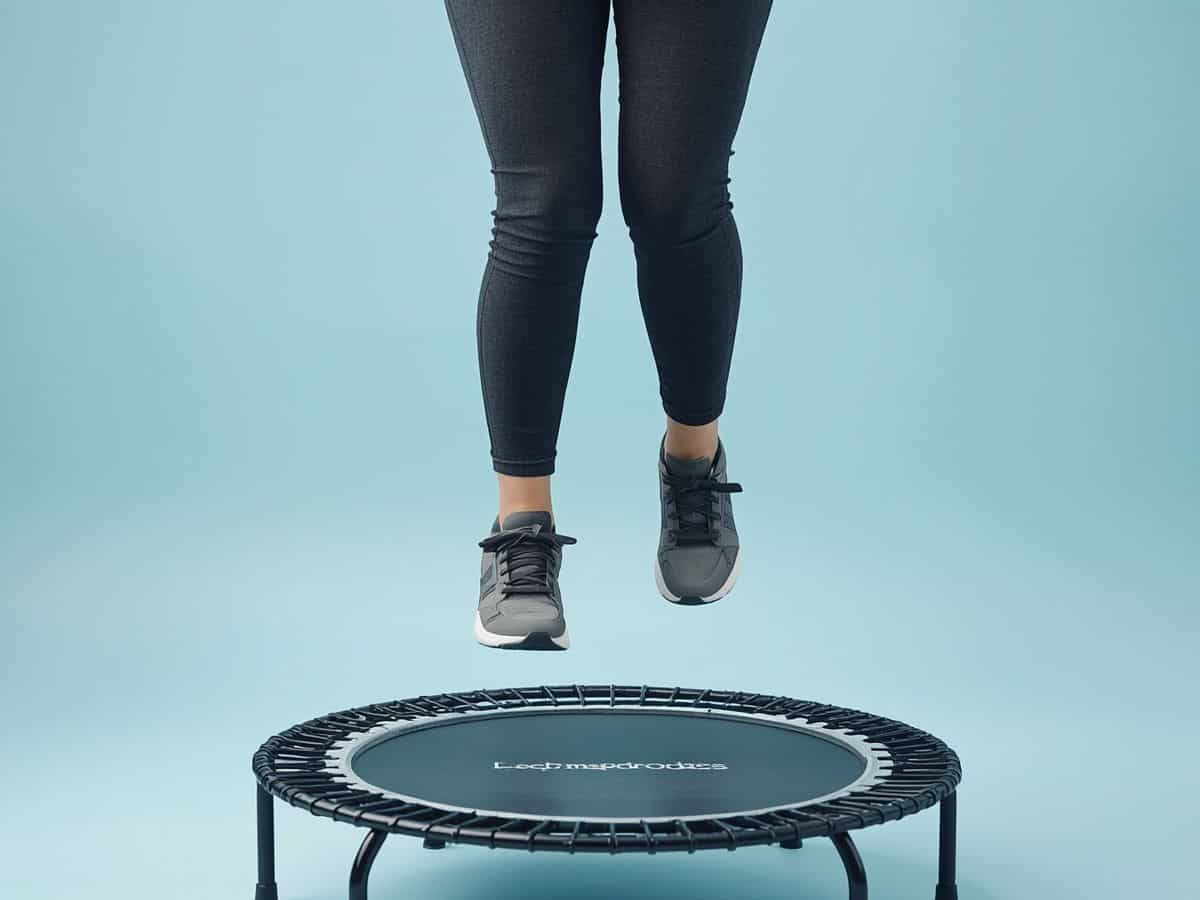
Rebounding is gentle bouncing on a mini trampoline. I usually do around 10 minutes every morning before my first coffee, using what’s called a “health bounce.” My feet don’t leave the surface, it’s a light up-and-down movement that gently activates the whole body.
I first came across rebounding years ago after reading an article about NASA research into trampoline-based exercise. What made me continue wasn’t the research alone, but how much better my body felt when I used the rebounder consistently.
I have lipedema in my legs, so swelling and heaviness can be an issue for me, especially before and after long-haul travel. Even with compression socks, I’ve found rebounding helps me feel more comfortable and supported.
For me, this isn’t about fitness per se. It’s about preparing my body for long-haul travel in my 50s so I can arrive feeling more comfortable and ready to move.
But it also helps practically with travel because I tend to walk a lot when I’m away, often 5+ miles/day. So this isn’t just recovery, it’s preparation for movement.
I prefer a rebounder with a handle for extra stability – it just feels safer and more supportive for me. This is the exact one I use.
2. Pre-Flight Strategy: How I Prepare My Body on Travel Day
My goal on travel day is simple: arrive at the airport naturally tired.
Whenever possible, I book evening departures, often around 10pm when flying from my home airport at Dulles to London.
To do that, I focus on three things:
- Movement
- Daylight exposure
- Staying lightly active all day
I get up early and go for a long walk so I can maximize natural daylight. This is especially important in winter when light levels are low.
Daylight exposure helps regulate your circadian rhythm, which makes it easier to rest on the plane.
By the time I reach the airport, I’ve usually walked around 5 miles without too much effort.
For me, this isn’t about fitness. It’s about arriving in a natural wind-down state so my body is ready for rest.
I also think carefully about what I wear on travel days.
Comfortable travel clothes designed for women over 50 make a big difference on long-haul flights, especially when you’re moving through airports, sitting for long periods, and trying to stay relaxed.
3. Long-Haul Flight Routine: Why I Skip Airline Meals and Alcohol
A common jet lag mistake is treating the flight like a normal evening out.
You board a late flight, get served a heavy meal, and often add alcohol.
But your body is already trying to adjust to sleep mode, and this combination can make jet lag worse the next day.
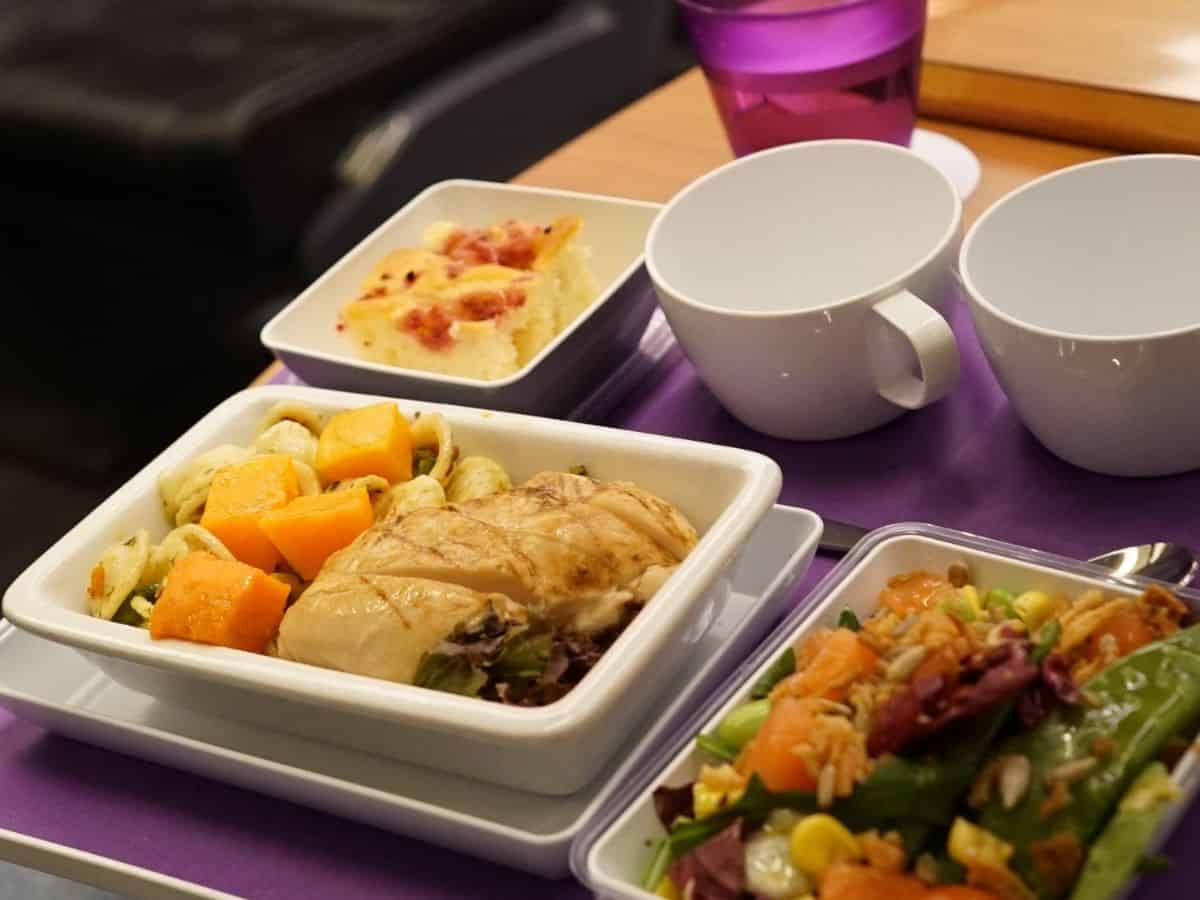
My approach is simple: I don’t eat the in-flight meal and I avoid alcohol on board altogether.
Instead, I focus on:
- A protein-rich meal before I leave: I avoid greasy or spicy foods, and I also tend to avoid foods that can cause bloating for me personally, like broccoli, cauliflower, beans, and pulses.
- Consistent hydration throughout the day: I’m much more intentional about this on travel days than I used to be, because even mild dehydration makes jet lag feel worse.
- Timing meals correctly: I skip the in-flight breakfast and wait until I land to eat. In practice, this often means going around 12–14 hours between my last meal and my first meal in the new time zone. I’ve found this just works better for me on long-haul travel days.
The result is that I arrive feeling lighter, more rested, and far less jet-lagged on day one.
It’s not something I do for health reasons; I’ve simply found it makes adjusting to a new time zone easier.
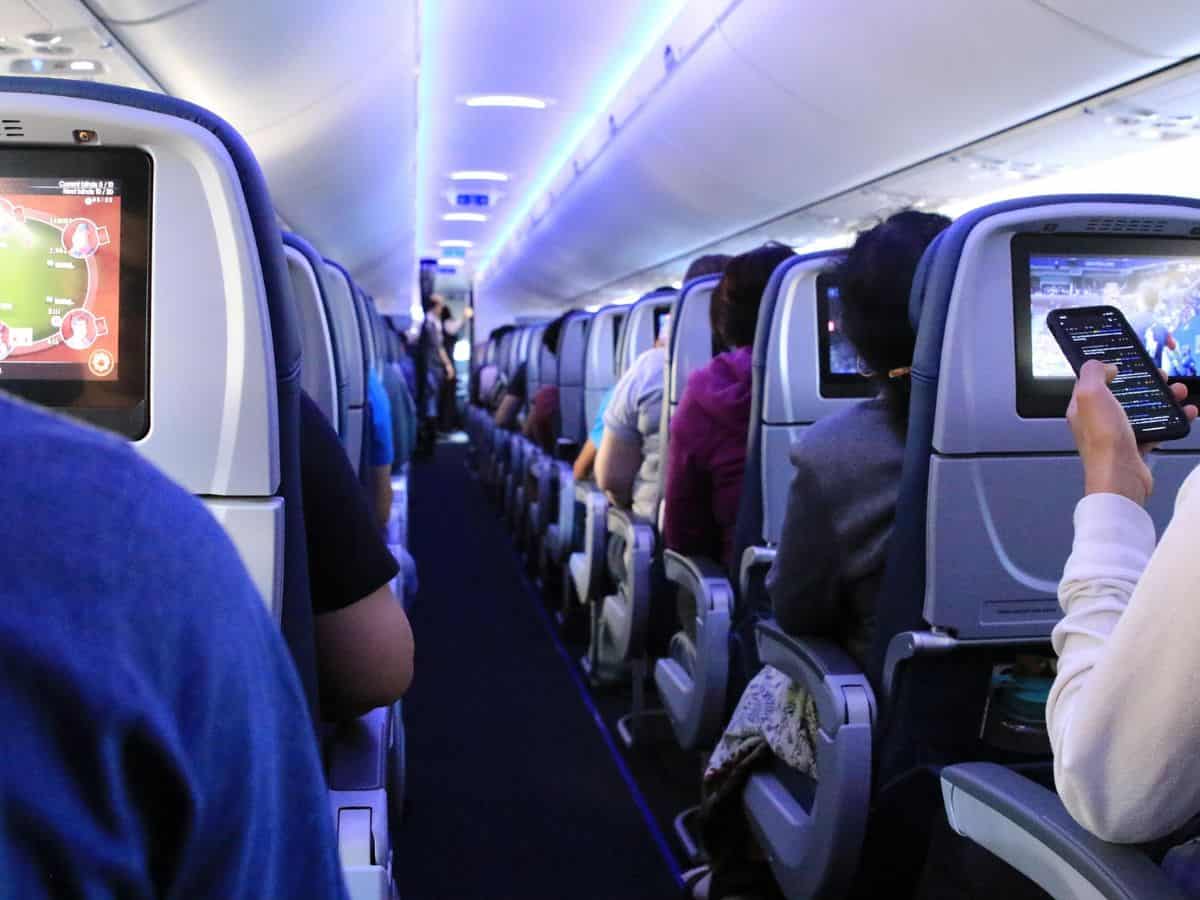
4. In-Flight Jet Lag Strategy: My Long-Haul Travel Non-Negotiables
Once I’m on board, I switch into a very simple routine designed to reduce stimulation and support rest.
My in-flight non-negotiables are:
- Compression socks. Because I have lipedema, I never fly long-haul without them. I also have wide calves, so finding a pair that fits properly has been important. I use the LEVSOX brand as they fit my height and don’t dig into the back of my knees, and the foot is a proper sock and not an open toe. This is the exact pair I use →
- Noise-cancelling headphones. I usually listen to an audiobook. It helps me switch off from everything around me. I use the Beats Studio Pro noise-cancelling headphones because they charge quickly and are a comfortable fit, even for long-haul flights. These are the headphones I use →
- Sleep mask. A simple silk sleep mask helps me create a dark, quiet environment even when the cabin is bright. This is the one I use →
- Neck pillow. I really like the Travelrest sleep neck pillow because it lies flat against the airline seat and has a velcro strap across the front to hold your head in place. This is the exact one I use →
- Comfortable clothing and slip-on shoes. I wear soft, loose clothing and shoes that are easy to remove. My feet tend to swell on long flights, so comfort wins every time. For travel days, I’m loyal to my Skechers. These are the ones I wear →
- A travel water bottle. Hydration is a big factor in how I feel when I land, so I always travel with a refillable bottle. I use the Owala insulated bottle. It’s the right size, large enough to stay hydrated but not so big that it’s heavy to carry. Plus, it fits in the seat-back pocket. This is the exact one I use →
My goal in flight is not to force sleep, but to reduce stimulation so my body can rest naturally.
On a long-haul flight, I usually:
- listen to an audiobook with a soothing narrator
- get up once mid-flight to walk and move around
- drink water regularly
- set an alarm about an hour before landing so I can use the restroom before the cabin gets busy

5. Arrival Day Jet Lag Reset: How I Adjust to Local Time Quickly
Arrival day is where the real jet lag reset happens.
If I’m somewhere warm and coastal, or my hotel has an outdoor pool, I prioritize getting into water. A swim after a long flight helps my body feel reset and re-energized.
If I’m in a city, I focus on:
- walking
- daylight exposure
- staying awake until the evening
- putting my legs up a wall (I find it helps ease some of the heaviness and discomfort)
The key rule is simple: I switch to local time immediately.
This is probably the single biggest change I’ve made over the years, and it’s the one that seems to have the biggest impact on how quickly I adjust.
That means:
- eat when locals eat
- sleep when locals sleep
- avoid long daytime naps
If I really need to rest, I limit myself to a 20-minute power nap (setting an alarm), then I get up and continue the day. Even if that means an early night, it helps reset my body clock faster.

6. When I Get Home: Resetting My Body Again
Jet lag doesn’t only affect the outward journey. Coming home from Europe can feel just as disorienting.
So I apply the same principles in reverse.
As soon as I’m home, I focus on:
- daylight exposure
- gentle movement
- getting back into routine quickly
Rebounding is one of the first things I return to. It helps support circulation after long periods of sitting and helps me feel less sluggish after travel.
In simple terms, it helps me feel more awake, less puffy, and more back to normal faster.
I also prioritise hydration and sleep routine on the first night back. A warm shower helps, and occasionally I’ll use a melatonin gummy to support sleep.
If I wake in the night, I don’t fight it. I get up briefly, move around, and let my body settle naturally.
The same rules apply in both directions: movement, light, hydration, and routine are what reset my body fastest.
Final Thoughts
How to beat jet lag after 50 is less about reacting after a flight and more about how you structure the entire journey.
Over years of frequent long-haul travel, I’ve learned that small, consistent habits make the biggest difference. It’s not one trick. It’s a system.
And because it’s built around habits rather than gadgets or supplements, it’s something I can repeat on every trip.
Now that my travel looks very different to the years when I was raising young children, I don’t want to spend the first few days of a trip recovering. I want to arrive ready to enjoy it.
If you’re planning your next trip, you might also enjoy this post: Women Over 50 Travel: 17 Lessons That Make Every Trip Better
FAQs About Beating Jet Lag in Your 50s
The best way to beat jet lag in your 50s is to prepare before you travel, stay active and hydrated during the flight, and switch to local time immediately on arrival. In practice, this means building a simple routine around movement, daylight exposure, and sleep timing rather than relying on a single fix. Over time, consistency matters more than any individual travel hack.
Jet lag often feels worse in your 50s because the body takes longer to recover, sleep can become lighter, and long-haul travel places more strain on circulation and energy levels – particularly during times of hormonal change such as menopause.
The fastest way to recover from jet lag is to get natural daylight as soon as possible, stay awake until local bedtime, and avoid long daytime naps.
These three factors help reset your body clock more quickly than rest alone. Light exposure in particular is one of the strongest signals your body uses to regulate sleep and wake cycles.
Yes, avoiding alcohol and in-flight meals can help reduce jet lag by improving hydration, digestion, and sleep quality during travel. Alcohol and carb-heavy meals can disrupt sleep cycles and leave you feeling more dehydrated, which often makes jet lag symptoms worse the next day.
Jet lag can last anywhere from one to several days depending on how many time zones you cross and how well you prepare before and during travel. A structured routine that includes movement, hydration, and immediate adjustment to local time can significantly shorten recovery time.
The most effective ways to reduce jet lag after long-haul flights are movement, daylight exposure, hydration, and aligning immediately with local time. These four factors work together to reset your internal body clock more quickly than rest or sleep alone.
This post may contain affiliate links for tours, hotels, and products (including Amazon). If you make a purchase through one of these links, I may earn a small commission at no extra cost to you. Thank you for your support.